Mahasarakham University have a policy to identify, monitor, and protect any IUCN Red Listed species and national conservation list species with habitats in areas affected
IUCN Red List, or the International Union for Conservation of Nature’s Red List of Threatened Species, is the world's most comprehensive source of information on the global extinction risk status of animals, fungi, and plant species. The IUCN Red List is compiled by the International Union for Conservation of Nature (IUCN) to classify or assess the level of risk of extinction and threats from human activity or natural disasters in an easily understandable way. The process for assessing status according to the IUCN Red List involves systematic stages and procedures. IUCN has established the following criteria for assessing the conservation status of each wildlife species: Extinct (EX), Extinct in the Wild (EW), Critically Endangered (CR), Endangered (EN), Vulnerable (VU), Near Threatened (NT), Least Concern (LC), Data Deficient (DD), and Not Evaluated (NE). Mahasarakham University recognizes the importance of this matter and has therefore established a policy to compile an inventory and identify species, conduct research, monitor and protect, and disseminate information for awareness and education regarding IUCN Red List and National Conservation List organisms found within the university's operational area, with the goal of mitigating negative impacts.
Compliance policy:
1. The relevant agency shall compile an inventory and identify the species of organisms on the IUCN Red List and the National Conservation List found within Mahasarakham University, and this inventory shall be updated annually.
2. The agency shall provide support for research and studies concerning species of organisms on the IUCN Red List and the National Conservation List.
3. The agency shall implement monitoring and protection measures, as well as disseminate information for awareness and education regarding organisms on the IUCN Red List and the National Conservation List.
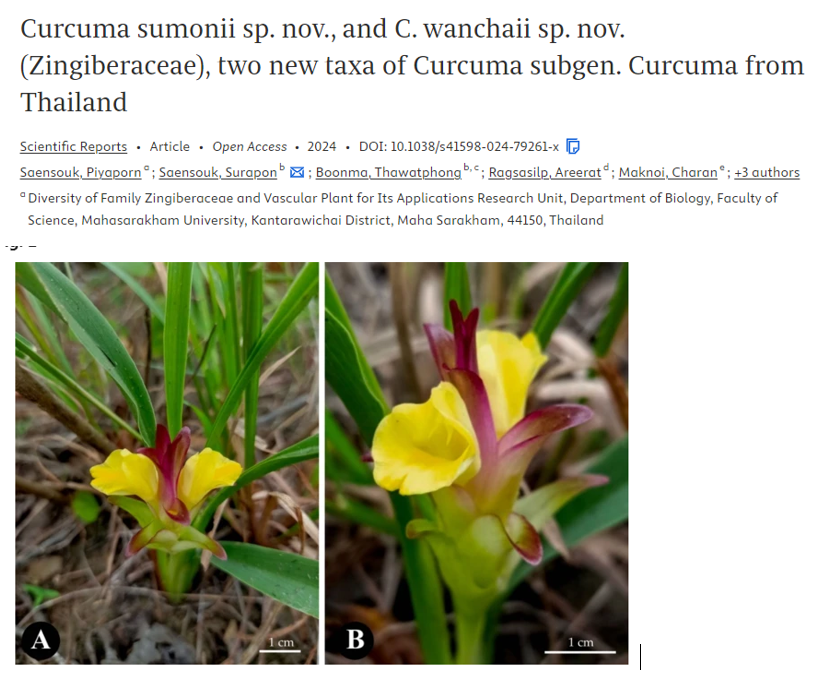
Curcuma sumonii sp. nov., and C. wanchaii sp. nov.
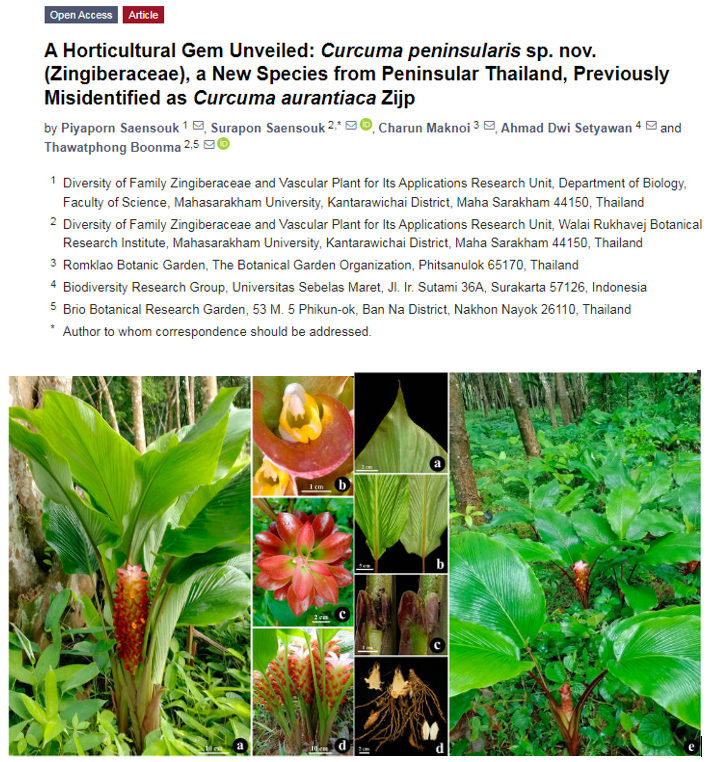
Curcuma peninsularis sp. nov.
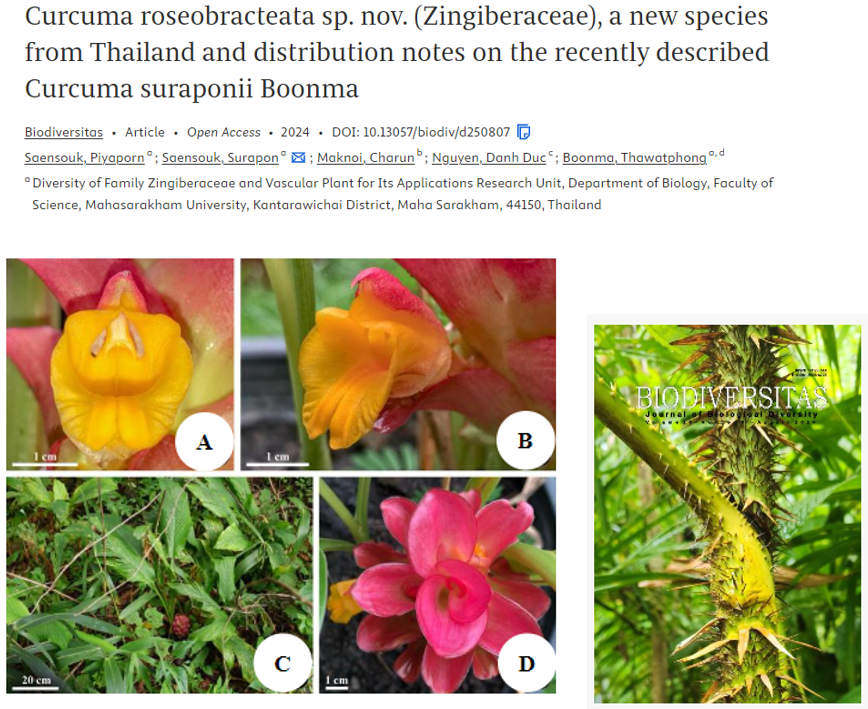
Curcuma roseobracteata
Policy to identify, monitor and protect any IUCN Red Listed species and national conservation list species with habits in areas affected by the operation of Mahasarakham university in 2023-2026
1. Title: Policy to identify, monitor, and protect any IUCN Red Listed species and national conservation list species with habitats in areas affected by the operation of Mahasarakham University
2. Authority: Asst. Prof. Sudarat Thanonkeo Ph.D,
Director Walairukhavej Botanical Research Institute (WRBRI)
3. Purpose of this Policy: To compile an inventory and identify species, conduct research, monitor and protect, and disseminate information for awareness and education regarding IUCN Red List and National Conservation List organisms found within the area of the university's responsibility, with the goal of mitigating negative impacts.
4. Date of Incorporation: 22 May 2023
5. Date of Review: Once in 3 years
IUCN Red List, or the International Union for Conservation of Nature’s Red List of Threatened Species, is the world's most comprehensive source of information on the global extinction risk status of animals, fungi, and plant species. The IUCN Red List is compiled by the International Union for Conservation of Nature (IUCN) to classify or assess the level of risk of extinction and threats from human activity or natural disasters in an easily understandable way. The process for assessing status according to the IUCN Red List involves systematic stages and procedures. IUCN has established the following criteria for assessing the conservation status of each wildlife species: Extinct (EX), Extinct in the Wild (EW), Critically Endangered (CR), Endangered (EN), Vulnerable (VU), Near Threatened (NT), Least Concern (LC), Data Deficient (DD), and Not Evaluated (NE). Mahasarakham University recognizes the importance of this matter and has therefore established a policy to compile an inventory and identify species, conduct research, monitor and protect, and disseminate information for awareness and education regarding IUCN Red List and National Conservation List organisms found within the university's operational area, with the goal of mitigating negative impacts.
Compliance policy:
1. The relevant agency shall compile an inventory and identify the species of organisms on the IUCN Red List and the National Conservation List found within Mahasarakham University, and this inventory shall be updated annually.
2. The agency shall provide support for research and studies concerning species of organisms on the IUCN Red List and the National Conservation List.
3. The agency shall implement monitoring and protection measures, as well as disseminate information for awareness and education regarding organisms on the IUCN Red List and the National Conservation List.

นโยบายการจัดทำบัญชีรายชื่อระบุชนิด การติดตามและปกป้อง ชนิดพันธุ์สิ่งมีชีวิตตามบัญชีแดงของ IUCN และบัญชีอนุรักษ์ของชาติ ที่พบมหาวิทยาลัยมหาวิทยาลัยเพื่อการลดผลกระทบ พ.ศ. 2566-2559
1. ชื่อนโยบาย: นโยบายการจัดทำบัญชีรายชื่อระบุชนิด การติดตามและปกป้อง ชนิดพันธุ์สิ่งมีชีวิตตามบัญชีแดงของ IUCN และบัญชีอนุรักษ์ของชาติ ที่พบมหาวิทยาลัยมหาวิทยาลัยเพื่อการลดผลกระทบ
2. ผู้มีอำนาจ/ผู้รับมอบหมาย: ผู้ช่วยศาสตราจารย์สุดารัตน์ ถนนแก้ว ผู้อำนวยการสถาบันวิจัยวลัยรุกขเวช
3. วัตถุประสงค์: เพื่อจัดทำบัญชีรายชื่อและระบุชนิด การศึกษาวิจัย การติดตามและปกป้อง และการเผยแพร่สร้างความตระหนักและให้ความรู้ของสิ่งมีชีวิตตามบัญชีแดงของ IUCN และบัญชีอนุรักษ์ของชาติ ที่พบเพื่อการลดผลกระทบพื้นที่รับผิดชอบมหาวิทยาลัยดำเนินงาน
4. วันที่เริ่มนโยบาย: 22 พฤษภาคม 2566
5. ระยะเวลาในการทบทวนนโยบาย: 3 ปี ทบทวน 1 ครั้ง ครั้งต่อไป พฤษภาคม 2569
IUCN Red List หรือ International Union for Conservation of Nature’s Red List of Threatened Species เป็นแหล่งข้อมูลที่ครอบคลุมมากที่สุดในโลกเกี่ยวกับสถานะความเสี่ยงต่อการสูญพันธุ์ของสัตว์ เชื้อรา และพันธุ์พืชทั่วโลก The IUCN Red List จัดทำขึ้นโดย องค์กรระหว่างประเทศเพื่อการอนุรักษ์ธรรมชาติ (International Union for Conservation of Nature, IUCN) เพื่อใช้ในการจำแนกหรือประเมินระดับความเสี่ยงของชนิดพันธุ์ในการสูญพันธุ์และการถูกคุกคามจากมนุษย์หรือภัยธรรมชาติที่สามารถเข้าใจได้ง่าย การทำการประเมินสถานภาพตาม IUCN Red List จะมีลำดับและขั้นตอนที่เป็นระบบ โดย IUCN ได้กำหนดเกณฑ์การประเมินสถานภาพของสัตว์ป่าแต่ละชนิดไว้ดังต่อไปนี้ ได้แก่ สูญพันธุ์ (EX–Extinct) สูญพันธ์ในธรรมชาติ (EW Extinct in the wild) ใกล้สูญพันธุ์อย่างยิ่ง (CR-Critically Endangered) ใกล้สูญพันธุ์ (EN–Endangered) มีแนวโน้มใกล้สูญพันธุ์ (VU–Vulnerable) ใกล้ถูกคุกคาม (NT-Near Threatened) ไม่ถูกคุกคาม (LC-Least Concerned) ข้อมูลไม่เพียงพอที่จะประเมิน (DD - Data Deficient) ยังไม่มีการพิจารณาประเมินสถานภาพ (NE-Not Evaluated) มหาวิทยาลัยมหาสารคามได้ตระหนักถึงความสำคัญเรื่องนี้จึงกำหนดเป็นนโยบายเพื่อจัดทำบัญชีรายชื่อและระบุชนิด การศึกษาวิจัย การติดตามและปกป้อง และการเผยแพร่สร้างความตระหนักและให้ความรู้ชนิดพันธุ์สิ่งมีชีวิตตามบัญชีแดงของ IUCN และบัญชีอนุรักษ์ของชาติ ที่พบเพื่อการลดผลกระทบพื้นที่รับผิดชอบมหาวิทยาลัยดำเนินงาน
แนวทางการปฏิบัติตามนโยบาย
1. หน่วยงานดำเนินการจัดทำบัญชีรายชื่อและระบุชนิดพันธุ์สิ่งมีชีวิตภายใต้ บัญชีแดงของ IUCN และบัญชีอนุรักษ์ของชาติ (IUCN Red Listed species and national conservation list) ที่พบในมหาวิทยาลัยมหาสารคาม และมีการปรับปรุงบัญชีรายชื่อนี้ทุกปี
2. ให้การสนับสนุนการศึกษาวิจัยเกี่ยวกับชนิดพันธุ์สิ่งมีชีวิตภายใต้บัญชีแดงของ IUCN และบัญชีอนุรักษ์ของชาติ (IUCN Red Listed species and national conservation list)
3. หน่วยงานมีการติดตามและปกป้อง และการเผยแพร่สร้างความตระหนักและให้ความรู้สิ่งมีชีวิตในบัญชีแดงของ IUCN และบัญชีอนุรักษ์ของชาติ (IUCN Red Listed species and national conservation list)