Assessment of Lead and Cadmium Contamination in Water Resources of Northeastern Thailand and Its Implications for Ecological Risk Evaluation in 2024
Assessment of Lead and Cadmium Contamination in Water Resources of Northeastern Thailand and Its Implications for Ecological Risk Evaluation, Egyptian Journal of Aquatic Biology & Fisheries 28(4): 783 – 798 (2024) by Tanee, Tawatchai is corresponding authors, Faculty of Environmental and Resource Studies, Mahasarakham University, Maha Sarakham, Thailand One Health Research Unit, Mahasarakham University
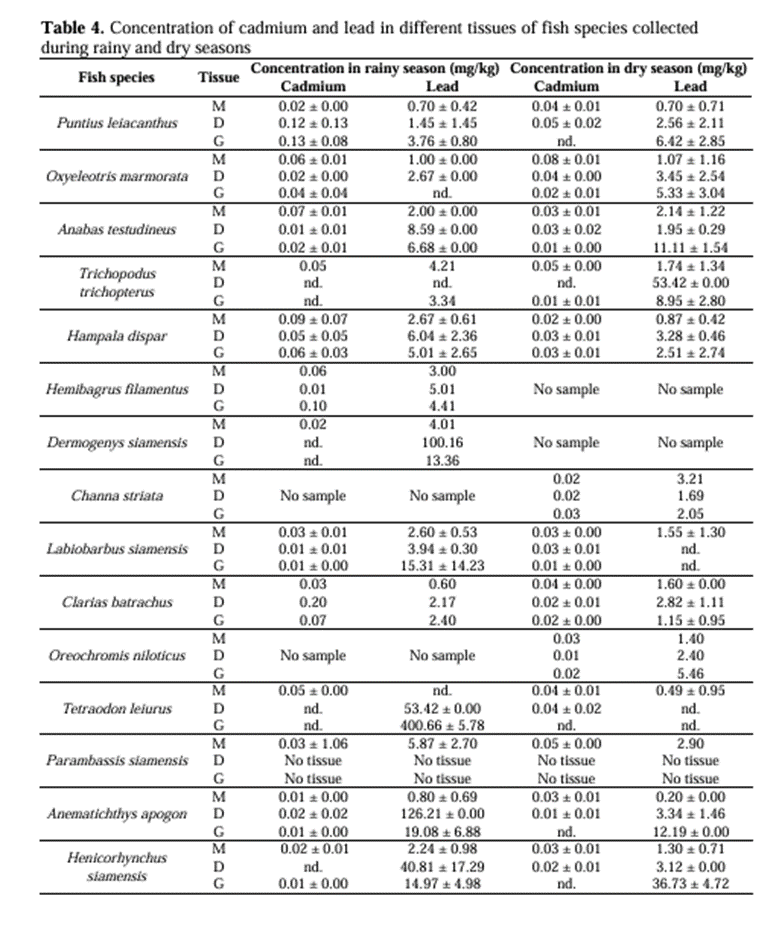
The accumulation of heavy metals in the environment can adversely impact both the food chain and human health. This research investigated cadmium and lead accumulation in water, sediment, and fish in Huai Kho Reservoir, Northeastern Thailand, with samples collected during both the rainy and dry seasons. Moreover, the bioconcentration factor (BCF), potential ecological risk index (PERI), and tolerable daily intake (TDI) were evaluated. Cadmium and lead levels in water and sediment exceeded the standard limits. Cadmium levels ranged from 0.02 to 0.06mg/ L and 0.31 to 0.42mg/ L, respectively, while lead levels ranged from 0.08 to 1.13mg/ kg and 3.63 to 15.28mg/ kg, respectively. Lead exceeded the limits in 18 fish species, while cadmium exceeded them in some species. In both the rainy and dry seasons, cadmium levels peaked in muscle, while lead was at its highest in the digestive tract. The BCF for lead was higher than that for cadmium, although no significant seasonal differences were observed in the accumulation. Even though the TDI assessment didn't exceed standard guidelines, the PERI indicated a high-risk level, emphasizing the need for legal measures regulating the use of heavy metal-containing substances.